Posts

Showing posts with the label brain

Do Our Brains Die As We Get Older?
Image
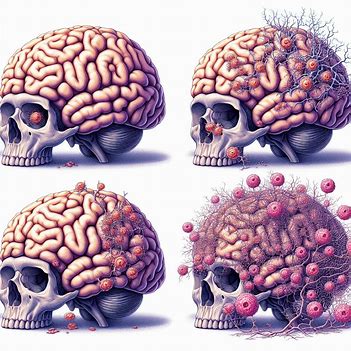
It is a common belief that neurons in our brains die off as we age and are never replaced. However, this  may not be true . The story is more complex, but it is undeniable that, as we get older,  our brains don't seem to work as well as they used to. It's just that the reason is not neurons dying off. I keep company with my 105-year-old mother-in-law. It is undeniable that her brain is failing her. In her case, the cause may be related to her failing heart, resulting in vascular dementia - brain failure caused by lack of blood supply. So, while many regard this as a "scientific" fact, the idea that our "neurons are dying out" is a metaphor for declining brain function. It's a helpful metaphor, but we can come up with a better one. We think of neurons somehow "connecting" the atomic version of "mind stuff," which somehow adds up to "us" - our experience of being in the world. That feeling - of being some continuing entity...

A Random Talk

This is an experimental blog post. The idea was to simply talk about a range of issues with the aim of creating a "mind map", then using the map to create traditional posts that are more structured and focused. But along the way, I wondered if I could post the original voice note So, to test this, click on the link below, which will show you a LINK to the audio Store that and play it. Your machine will probably have an app that plays audio. In my case, it's iTunes. This talk can be indexed just like a text essay. In the long run, the plan is to take notes on my own "rant" in mind map form (which can also be shown in the blog). A Random Talk

Frames All The Way Down

Image
I have been rather dismissive of Hawkins' " Thousand Brains " idea but I can't help thinking he's on to something, specifically: Once you broaden your understanding of what a "frame*" is, it is quite plausible that people think in frames. The most powerful computer system we have built so far, the Internet, runs on a relatively simple "frame language", understood by over a billion "hosts" including the one you are reading this on. Hawkins provides a plausible description of human experience in terms of "frames" somehow being the unit of experience. It is plausible that the neocortex has some kind of structure that implements frames, including the ability to create frames "on the fly" and use them as a unit of memory and reasoning. Thousand Brain is not too dissimilar from the theory presented in Surfaces and Essences, which presents analogy as the "fuel of thought". "Surfaces" is really talking ...

Your Brain is a Virtual Reality Machine

Image
  Our ability to experience "virtual" worlds is not something new. Evolution has provided it as basic equipment along with our opposing thumbs. It's not a bug. It's a feature. On the most fundamental level, we are constantly experiencing the future and the past: the flow of time. This ability is essential to what we call purposeful behavior. We love to debate whether or not other animals have this ability and to what degree, but it's clear that we have it in spades. It is essential to who we are as humans. I am fascinated by how the brain produces the virtual world that we call "consciousness". It turns out to be quite a trick. Sense information arrives at different times. For example, sound and smell arrive with very little processing, but virtual information goes through massive complex analysis. Yet we experience it all at the "same time". We experience the decision to move after the brain has sent signals to move. Our experience slightly p...

Russian Dolls and The Mind

On Tue, Mar 12, 2019, at 7:30 PM Len Bruton <...> wrote: There seems little doubt that science looks for explanations by seeking out those physical objects within brains that may yield a closer appreciation of how minds function and maybe just where they are to be found!!  Following your very different approach, my thought experiment is to ask whether Earthly minds and whether Earthly consciousness existed 100 million years ago?  Is it then a valid question to ask whether reality existed prior to minds This question can send us spiraling down an infinite regress. There seem to be two ways of stopping this. Either accept the reality of "mind" or accept the reality of "the world". Otherwise, you have a problem of reality being something in the mind, which is itself in reality, or a model of reality and so forth ... Wayne Brown <chillyfinger@gmail.com> to Len Given that we have a mind, it also makes sense if other living things have a mind or someth...

Roots

Image
I have lately become impressed with the what's going on in the brain. Learning more about the small details, I wind up asking myself about the "big picture" that these details reveal. I'm a visual kind of guy, so I'm thinking about a picture something like this: Neural network in the brain That picture is showing main connections only - myelinated "high speed" connections. The actual picture would be a packed tangle of axons and dendrites - for example, the massive wad of connections that make up the "white matter" in the brain, connecting (on average) each neuron in the neocortex with 1,000 other neurons. White Matter in the Brain is a Wad of Connections Where else do we see something like that? Roots in the Forest Floor There is a tangle of roots under our feet in the forest floor. We usually see the big ones that manage to break the surface and threaten to trip us up, but the network is much more extensive, especially in a thriving "old...

Thoughts on Religion vs. Reality

For the moment, let me talk about the world of human experience as "E". The world that Science investigates is assumed to exist a part from human experience , although we can only know it through human experience. Without really thinking about it, we imagine the "real world" to be about the shared experience: verifiable, consistent and augmented by what we call "reason". But we have long admitted that Universe, which I will call U, is not the same as "E". In fact, we assume that we can never know "U" entirely, directly or completely. We all know that "E" is not the same for each of us. In fact, it is quite remarkably different between different cultures and different times or even for a single individual throughout his or her lifetime. The question at hand is, is there anything "out there" apart from E and U? In most religious traditions the answer is "yes".  Most religions postulate a universe in ...

Now What?

Image
We shall not cease from exploration, and the end of all our exploring will be to arrive where we started and know the place for the first time.  T. S. Eliot - Little Gidding I have been writing for a long time about the concept of "supermind" and the "dragon". Groups of humans - armies, governments - have a life of their own and thrive at the expense of the humans that oppose them - even their own members.  These groups steal our identity and prevent us from thinking for ourselves. It's all true, of course, but what is new is the total acceptance of the situation. Comfort almost. This is the human condition. Our "minds" function as part of a whole. It may be a mistake to "analyze" - to break things down into pieces, but indulge me for a moment while I describe things that make up our "minds" that are usually regarded as something happening between our ears. The brain, especially considered as part of the body (Damasio). The functio...

The Brain As an Amazing Symmetry Computer

I have a coffee cup in front of me (I usually do). If I rotate it or move or see it in different light it my brain automatically makes me experience it as the same cup. If you have ever tried to make a computer figure this out, you will see how astonishing this is. What's more, the cup will be seen as the same cup tomorrow and the same as the cup that I washed a week ago (or is it two weeks? The point is, that doesn't matter). This is symmetry under a transformation in time and space . It takes place so automatically that most of us will go through our entire lives without thinking of it at all. There is another, related, trick that the brain does. It makes me "see" the cup as a form . A form is a bunch of "stuff" that is more or less arbitrarily treated as the "same thing". My dog is quite capable of seeing a flying tennis ball as a "thing" that can be snatched out of the air, but she seems to be uninterested in the "things" sh...

Susan Greenfield - Neuronal Assemblies

Image
These slides are taken from  Susan Greenfield's presentation  concerning visualization of dynamic processes in the brain and her sweeping new theory of consciousness.  Greenfield tests her model against 5 different ways we think of consciousness, particularly our sense that there are "degrees" of being conscous Greenfield points out that Electrophysiology models the brain at tiny resolution and microsecond time intervals versus the commonly seen fMRI scans with poor resolution and long time scales. There is a huge gap between what these two models can say about what is happening in the brain. Greenfield's method bridges this gap using voltage-sensitive die imaging,  This method shows a mid-range number of cells ( a few million) at short time interval (18 ms in the above slide). This gives a mental model of consciousness that she compares to a stone being thrown in a puddle. In this talk, she extends that model in quite a bit of detail. From 1:34:17 onward, she presen...

An Effective Field Theory of Consciousness

The wave equation of Quantum Mechanics P'(U') = P(U) completely describes the Universe, or more precisely, what we think we can know about the Universe. I'm leaving out all the usual Greek letters here (P is usually "Phi"). U is a vector in Hilbert space, essentially an infinite list of "facts", including the value of every field (gravity, electromagnetic etc) at every point in the Universe. What you pay for rent is in there somewhere. This theory becomes useful if you add another variable, K, which represents a restriction on the wave function to a domain of concern or applicability. The equation then becomes an " effective field theory ", P'(U',K) = P(U,K). K will specify things like velocities much less than the speed of light, gravitational fields weaker than in a black hole etc. K may be so restrictive that things like gravity can be entirely ignored (as in a particle accelerator, where the effect of gravity is vanishingly small c...

Henry Markham, Ray Kurzweil and the Artificial Brain

Image
A Popular Fairy Tale Comparing human brains to computers has become something of an industry lately. Like nuclear fusion, an emergent silicon mind seems to be always just around he next corner. The poster boy for this idea is Ray Kurzweil . If you want to watch a movie imagining precisely this vision, take a look at Transcendence . Transcendence is a tolerably good movie but brain capture fails in the movie for truly stupid reasons (plot spoiler) because it apparently fails to capture the "soul" and not due to any fundamental difficulty involved in creating a mind in a machine. The monstrously expensive and spectacular failure of the Blue Brain project was conceived by Henry Markham. You can view his  version of this fairy tale on TED.  [1] So How Big a Computer Do We Need? The 19 million volumes in the US Library of Congress represent about 10 trillion characters - 10,000,000,000,000 characters. To make the analogy even approximately apt, we need to imagine each character i...

Daniel Dennett and His Intuition Pumps

Image
Dennett's "Intuition Pumps" has inspired me, at last, to write a book. Maybe. I'd call it "Better Intuition Pumps" (BIP). Dennett's book is a lovely "intuition pump" in its own right, but it cries out to be rewritten, refuted or at least challenged. In other posts, I'll flesh out possible chapters in BIP, but I can outline some main points here. Dennet champions as "Scientific" discipline for the study of mind, which he calls heterophenomenology  "H". The idea is that anything important about the mind can be learned from the "outside", through experiments, interviews etc.  The data "H" works with is the set of observable, documented "observations" along these lines. My problem with H is that it doesn't actually study the mind. Dennett is making the assumption that the mind is , for all intents and purposes, the brain. But one would think this is exactly what he needs to prove. "Pump...